Defining the Gap Between Standard Recycling and Enterprise ITAD
 4
4 May
The terms recycling and IT asset disposition are frequently used interchangeably in boardrooms and facilities meetings across the country. On the surface they seem to describe the same outcome which is the removal of old technology from a building. However for an enterprise looking to manage risk and satisfy auditors in 2026 the difference between these two concepts is the difference between a secure operation and a catastrophic liability.
Standard electronics recycling is primarily a waste management function. It is a process focused on the physical volume of material and the recovery of raw commodities like steel and plastic and aluminum. When you call a standard recycler you are essentially hiring a specialized hauling service to clear out your loading dock. Their primary metric is weight and their primary goal is to ensure that the material stays out of a landfill. This is a valuable service for consumer goods but it is fundamentally inadequate for the complex security needs of a modern business.
The Strategic Shift to IT Asset Disposition
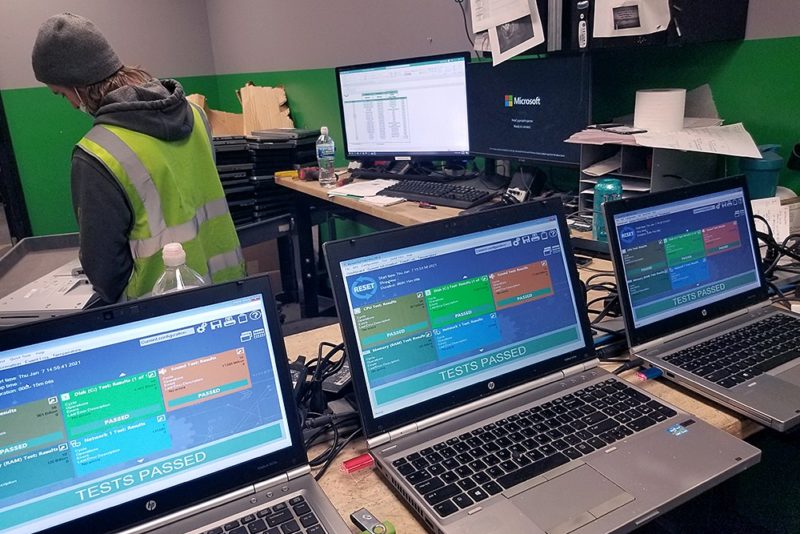 Enterprise IT Asset Disposition or ITAD is a comprehensive security and financial strategy. It is not just about moving boxes out of a closet. It is a disciplined lifecycle management process that prioritizes data security and legal compliance and value recovery. While recycling ends at the shredder ITAD begins with a serialized audit and ends with a documented chain of custody that protects your organization from federal fines and reputational ruin.
In an ITAD framework every device is treated as a potential data breach until it is verifiably sanitized. This includes the laptops and servers you would expect but it also extends to the less obvious targets like printers and networking switches and smart security cameras. An ITAD provider does not just weigh your material they catalog every serial number and track every movement and provide the auditable proof that your data was annihilated before the hardware was recycled.
What is an ITAD Program and Why Do You Need One?
Risk Mitigation as a Primary Goal
The biggest risk in standard recycling is the loss of visibility. Once the gear leaves your facility in the back of a standard scrap truck you have no way of knowing if a hard drive fell off the pallet or if a technician decided to take a laptop home. If a data breach occurs three months later you have no evidence to prove that you were not the source. You are left with a generic receipt for five hundred pounds of mixed electronics which is a worthless defense in a courtroom.
An enterprise ITAD program eliminates this blind spot. It creates a bulletproof audit trail. Every asset is scanned on-site and tracked through secure transport and verified at the processing facility. If an auditor asks for proof that a specific server from your 2024 refresh was destroyed you can produce a report that shows the exact date and method of its destruction. This level of rigor is what separates a professional ITAD partner from a simple scrap vendor.
Financial Optimization and Value Recovery
Another major distinction is how the value of the hardware is handled. Standard recyclers often view your equipment as scrap metal. They are looking at the price of copper and gold. An ITAD partner looks at the residual market value of the hardware itself. Many of the servers and switches you are retiring still have significant worth on the global secondary market.
Instead of paying a recycler to take your gear an ITAD program can often generate revenue for your organization. By professionally refurbishing and remarketing your retired assets an ITAD provider can return capital to your IT budget. This turns a logistics expense into a strategic financial win. You are not just paying for a cleanup you are maximizing the return on your initial technology investment.
How Certified E-Recycling Boosts Your ESG Score
The Governance and Compliance Mandate
As we move deeper into 2026 the regulatory pressure on environmental and data reporting is only increasing. Programs like the SEC climate disclosures and the updated HIPAA requirements demand a level of documentation that standard recycling simply cannot provide. You need to know exactly how much material was recovered and how much was diverted from landfills to satisfy your environmental social and governance reporting.
Choosing ITAD over standard recycling is a decision about corporate governance. It shows that your organization understands its responsibility to protect its customers and its employees and the environment. It moves the conversation from how do we get rid of this junk to how do we securely manage our retired assets.
Read More: What is IT Asset Disposition and the Benefits?
Securing Your Enterprise Future
Stop treating your hardware like common waste. The risks associated with a data breach or an environmental compliance failure are too high to leave to a standard recycler. You need the precision and the security and the financial insight of a professional ITAD program. Contact Sadoff E-Recycling and Data Destruction today to learn how we can transform your asset disposal into a strategic and secure operation.
Categorized in: IT Equipment