Embedded Battery Threat: Is Your IT Cleanout a Fire Hazard?
 9
9 Dec
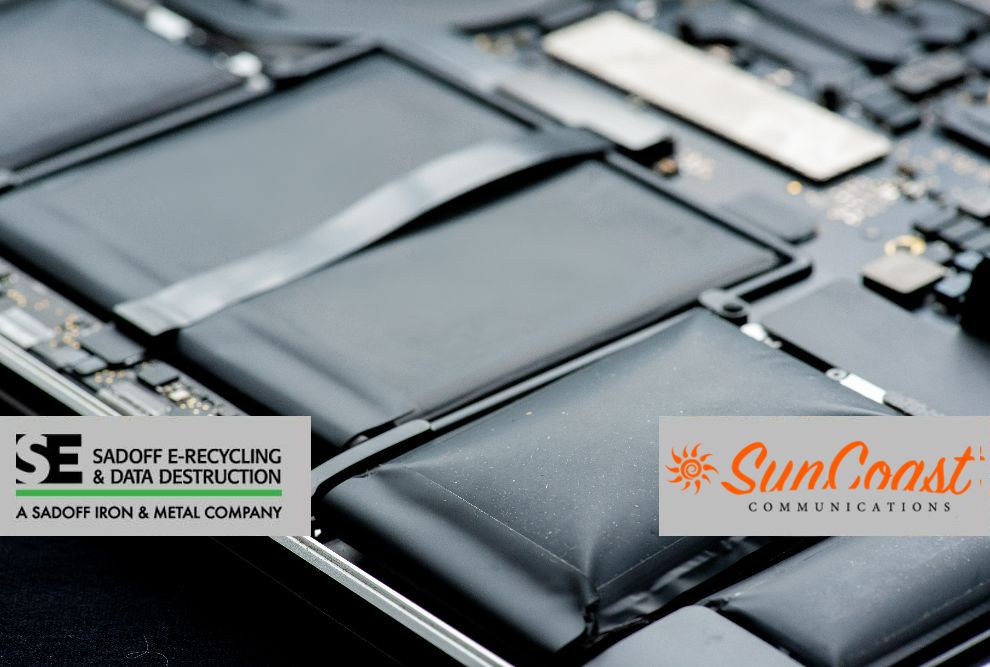
The rules of disposal have changed because the hardware has changed. You might see a box of old tech, but a fire marshal sees a collection of incendiary devices. This is the “Embedded Battery” problem. To make devices sleeker, manufacturers have integrated lithium-ion batteries into the device structure itself. They are glued and soldered, not swapped. When these devices pile up and age, they become volatile. Treating them like generic e-waste isn’t just messy. It is a recipe for a facility fire.
The Mechanics of a Thermal Event
Lithium-ion batteries are miracles of energy density, but they are chemically volatile. They work by moving ions between a cathode and an anode through a liquid electrolyte. As they age, or if they are crushed at the bottom of a heavy bin, the thin separator inside the battery can fail.
This causes an internal short circuit, leading to “thermal runaway.” This isn’t a slow burn. It is a violent, chemical fire that creates its own oxygen. It burns at over 1,000 degrees Fahrenheit and is notoriously difficult to extinguish with standard fire suppression systems. A single swelling battery in a pile of old laptops can ignite a blaze that consumes your entire storage room, and potentially your building, in minutes.
This risk is amplified in storage closets that aren’t climate-controlled. Extreme heat or cold can accelerate battery degradation, making them even more unstable.
Budgeting for E-Waste: The Costs vs. the Risk of Inaction
Why Standard Shredding is Deadly
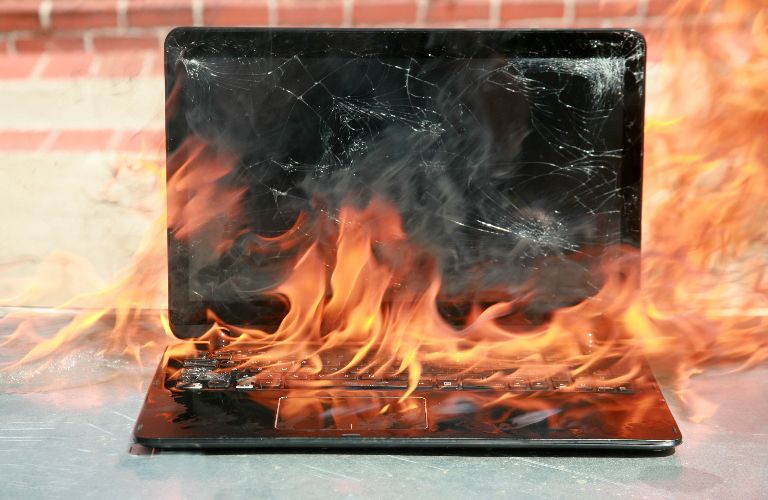 This danger doesn’t end when the truck drives away. It actually gets worse if you choose the wrong recycler.
Many uncertified or “low-cost” scrappers use massive industrial shredders to process e-waste efficiently. They throw everything into the hopper to grind it down for metal recovery. But if you feed a device with an embedded lithium-ion battery into a standard shredder, it will explode.
We have seen it happen in the industry time and time again. Shredder fires are a massive risk to worker safety and environmental compliance. If your vendor causes a fire because they didn’t properly handle your hazardous materials, that liability can blow back on you. You are responsible for ensuring your waste is handled correctly.
Read More: Why Shredding an SSD is Different Than an HDD
The Sadoff Approach: Manual Intervention
Safe disposal of modern IT assets requires a specialized process. It requires manual intervention.
At Sadoff E-Recycling & Data Destruction, we have the expertise to identify these embedded risks. We know which devices harbor hidden batteries, even the ones that don’t look like it, like certain smart cables or thin clients. We don’t just dump bins into a machine.
We have dedicated manual disassembly lines where trained technicians carefully extract these batteries before the hardware is sent for data destruction and shredding. We carefully pry open the glued cases, disconnect the soldered leads, and remove the battery intact.
We treat these batteries for what they are: regulated hazardous materials. They are isolated, taped to prevent shorting, and processed through a dedicated downstream battery recycling channel.
Defuse the Risk Before It Ignites
That closet of old tech isn’t just taking up space. It is a physical threat to your building and your employees. Don’t wait for a “thermal event” to rethink your storage policy.
Treat your old electronics with the caution they require. Contact Sadoff E-Recycling & Data Destruction for a safe, certified cleanout that neutralizes the fire risk before it starts.
Categorized in: E-Recycle


 Google map directions
 Google map directions
 Google map directions
 Google map directions
 Google map directions
 Google map directions
 Google map directions